Hands are among the most frequently used parts of the human body at work, making them particularly vulnerable to workplace injuries. Workers in manufacturing, construction, engineering, logistics, chemical handling, welding, and other industries may regularly come into contact with sharp edges, heat, chemicals, rough materials, and mechanical hazards.
This is why choosing the right safety gloves is an important part of workplace safety.
Why Are Safety Gloves Important?
Our hands perform almost every task—from handling tools and machinery to lifting materials and assembling components. Without appropriate protection, workers may experience cuts, abrasions, burns, punctures, or exposure to harmful substances.
Safety gloves provide a protective layer between the hands and workplace hazards. However, not every glove is suitable for every task. Selecting gloves according to the nature of the job is essential.
Different Types of Safety Gloves
Modern workplaces require different types of hand protection. Depending on the working environment, companies may use several varieties of safety gloves.
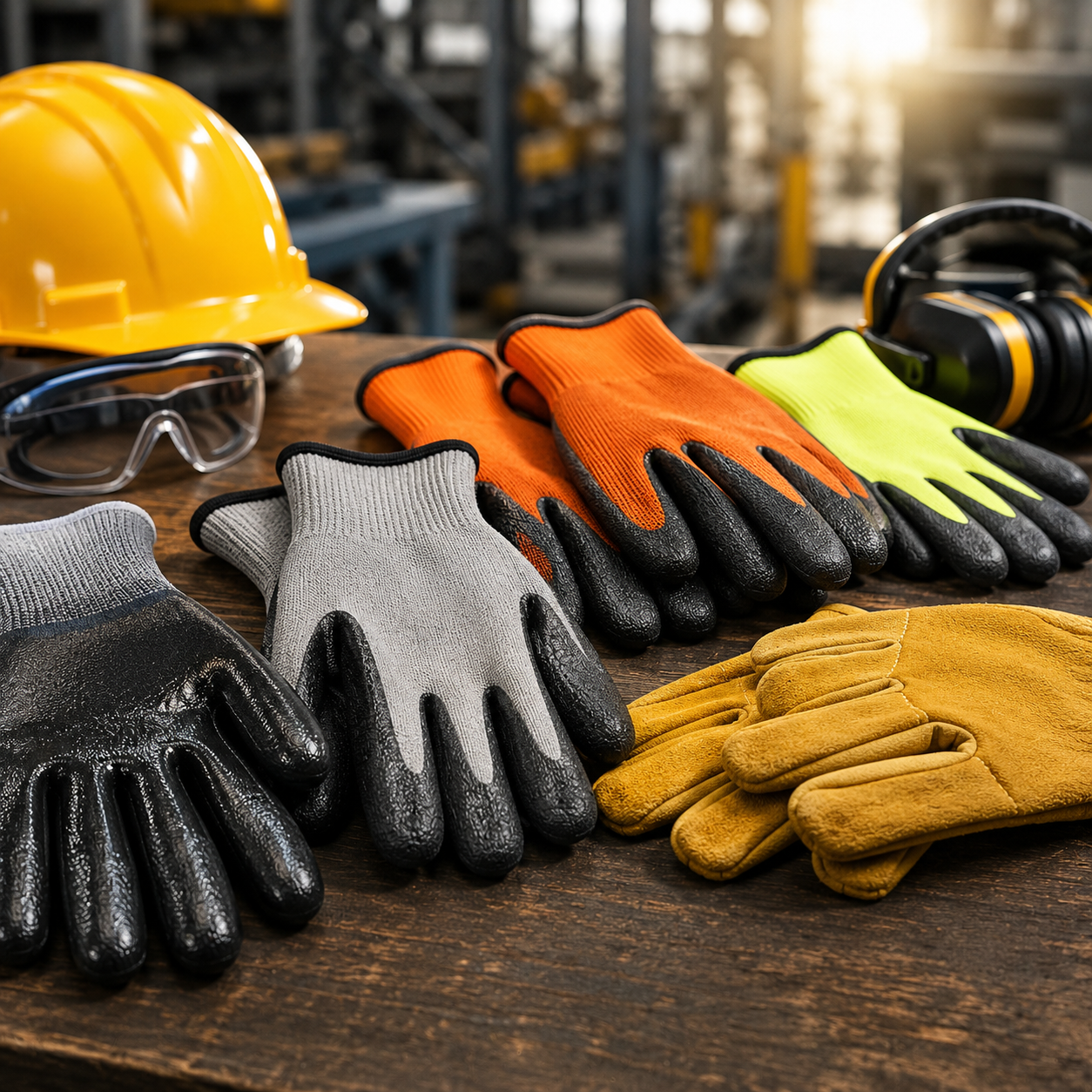
Nitrile-coated gloves can provide grip and protection for a variety of industrial handling applications. They are often useful when workers need flexibility and good handling ability.
PU-coated gloves are designed for applications where dexterity, grip, and general hand protection are important.
Latex-coated gloves can be suitable for certain handling and industrial applications where flexibility and grip are required.
For environments involving sharp materials, cut-resistant gloves can provide additional protection against cuts and abrasions.
Workers dealing with heat may require heat-resistant gloves, while chemical-handling operations may require appropriately designed chemical-resistant gloves.
There are also leather gloves and welding gloves designed for demanding applications where durability and protection are important.
Choosing the Correct Gloves
The most important factor when selecting safety gloves is understanding the workplace hazard.
Ask questions such as:
- Is there a risk of cuts?
- Are workers handling chemicals?
- Is heat involved?
- Are sharp materials present?
- Is strong grip required?
- Will the gloves be used for extended periods?
- Does the worker require flexibility and finger movement?
The answers can help determine which type of glove is appropriate.
Comfort and Fit Are Essential
Protective equipment should not make work unnecessarily difficult. Gloves that are too tight may restrict movement, while gloves that are too loose can affect grip and handling.
Proper sizing and comfortable materials can help workers perform tasks more efficiently while maintaining hand protection.
For employees working long shifts, comfort becomes especially important. Gloves should provide a balance between protection, flexibility, grip, and durability.
Supporting a Safer Workplace
Safety gloves are only one part of a complete workplace safety program. Employers should also provide appropriate training, safety procedures, hazard identification, and other required PPE.
HILLSON Safety Products offers a range of hand-protection options designed for different working conditions, including coated gloves, cut-resistant gloves, heat-resistant gloves, chemical-resistant gloves, leather gloves, and welding gloves.
Conclusion
Hands are essential tools for every worker, and protecting them should be a workplace priority. Selecting the right safety gloves according to the job can help reduce exposure to common workplace hazards while supporting comfort and productivity.
Protect your hands. Work confidently. Work safely.



No comment