Workplace safety should always be a priority, especially in industries where employees are exposed to heavy machinery, sharp objects, slippery surfaces, and demanding working conditions. Among the most important pieces of personal protective equipment (PPE), safety shoes play a crucial role in protecting workers’ feet from everyday workplace hazards.
Whether you work in construction, manufacturing, engineering, warehousing, logistics, or industrial environments, choosing the right safety footwear can make a significant difference in comfort, protection, and productivity.
Protection Against Workplace Hazards
Industrial workplaces can expose workers to numerous risks. Heavy materials may fall on the feet, sharp objects may cause injuries, and wet or oily surfaces can increase the possibility of slipping.
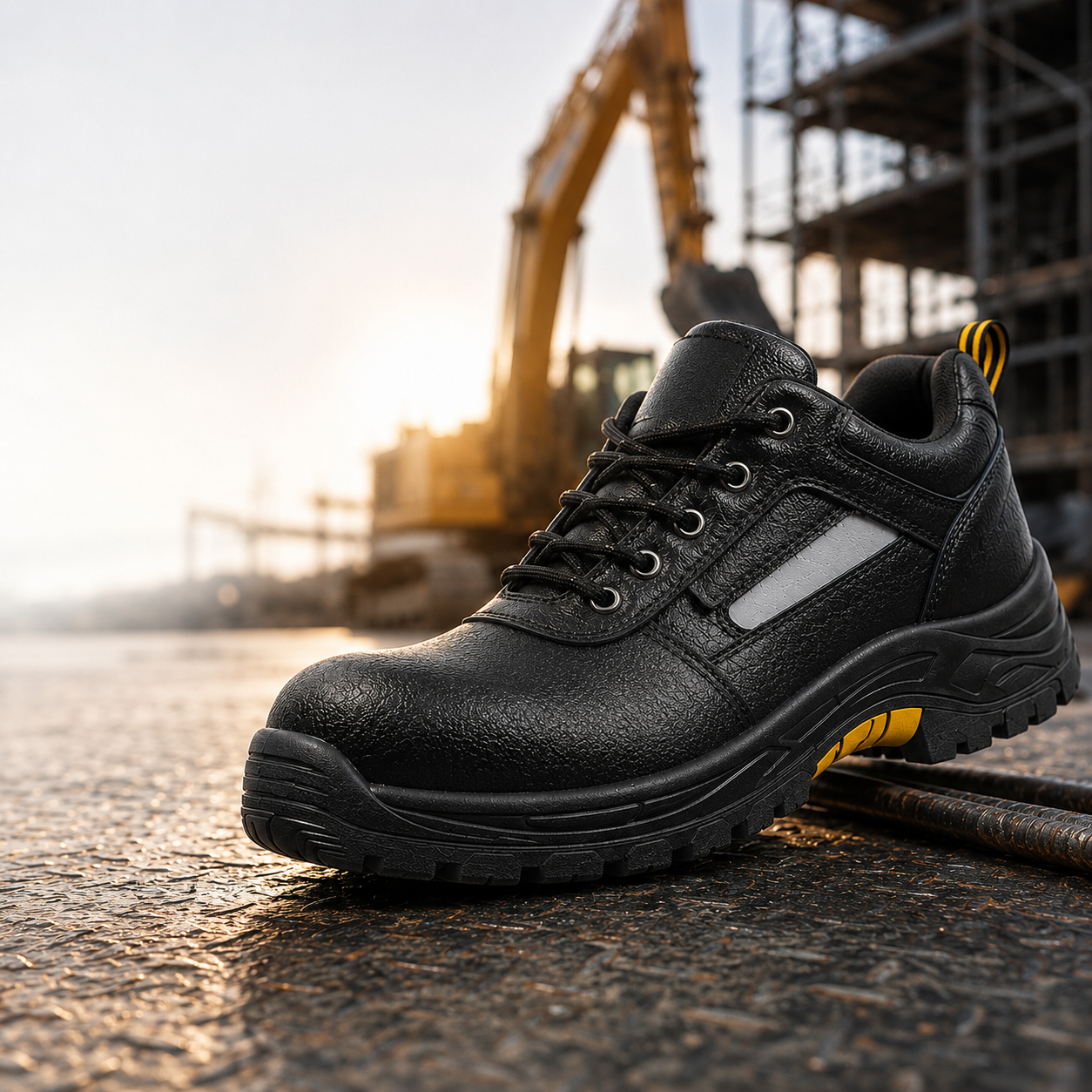
Safety shoes are designed to provide additional protection compared with ordinary footwear. Features such as reinforced toe protection, puncture-resistant construction, slip-resistant soles, and durable materials can help workers handle challenging environments more safely.
For employees working around heavy equipment and machinery, appropriate safety footwear provides an important layer of protection between the worker and potential hazards.
Slip-Resistant Soles for Better Stability
Slips and falls are common workplace accidents, particularly in environments where oil, water, chemicals, or other substances may be present on the floor.
Safety shoes with slip-resistant soles are designed to provide better grip on different surfaces. A strong tread pattern can help improve stability while walking, standing, or working on industrial floors.
This is particularly useful for workers who spend long hours moving around warehouses, factories, construction sites, and workshops.
Puncture Resistance
Construction sites and industrial workplaces can contain nails, metal pieces, sharp tools, and other objects that may damage ordinary footwear.
Puncture-resistant safety footwear provides an additional protective barrier between the foot and hazardous objects on the ground. This feature can be particularly valuable for construction workers, maintenance teams, and industrial employees.
Comfort Matters Too
Safety footwear should not only provide protection—it should also be comfortable.
Employees may wear their safety shoes for eight or more hours every day. Lightweight construction, comfortable interiors, proper fitting, and supportive soles can help reduce discomfort during long working hours.
A comfortable pair of safety shoes can also help employees stay focused on their work instead of constantly adjusting or dealing with uncomfortable footwear.
Choosing the Right Safety Shoes
Different workplaces have different safety requirements. Before selecting safety footwear, employers and workers should consider the working environment, potential hazards, required protection, fit, durability, and comfort.
HILLSON safety shoes are positioned around the idea of combining protection, comfort, durability, and reliable performance for demanding work environments.
Conclusion
Safety shoes are an essential part of workplace protection. From slip resistance and puncture protection to durable construction and everyday comfort, the right footwear can provide valuable protection in challenging working conditions.
Investing in quality safety footwear is not simply about buying shoes—it is about creating a safer and more comfortable working environment.
Safety starts from the ground up. Choose protection you can trust.

No comment